Vinyl, Fiberglass or Concrete: Choosing an Inground Pool Type
The material your pool is made from shapes its look, its feel underfoot and how you care for it, so it is worth settling before anything else.
October 20, 2026 · 4 min read
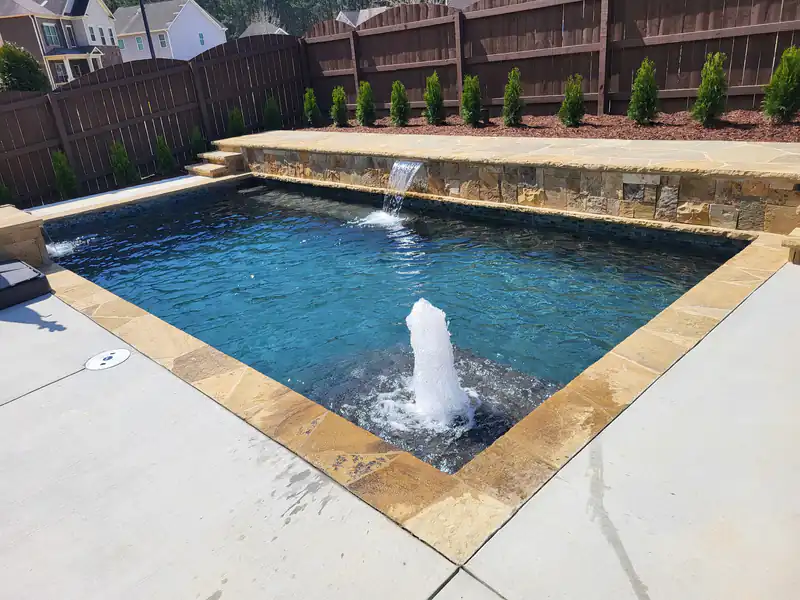
Every pool conversation we have at Hilltop Pools and Spas, Inc. eventually lands on the same question: what is the pool itself going to be made of? Inground pools come in three construction types, vinyl, fiberglass and concrete, and each one behaves differently in your yard, on your calendar and in your maintenance routine. We build concrete pools primarily and we also offer vinyl, so we can speak plainly about those two. This guide lays out how the three compare so you can walk into a consultation knowing what you are weighing.
What the three types have in common
All three are inground pools. They sit in an excavation, they need a stable base and sound drainage around them, and they depend on good circulation and filtration equipment to stay clean. The differences come down to what forms the walls and floor, what touches your feet and your skin, and how much freedom you have over the shape. Those differences drive nearly every other decision, from coping and tile to the way the pool ties in with a patio or a spa.
Vinyl: lowest initial cost, any shape
A vinyl pool is built from a wall system, a prepared floor and a custom-fit liner. Of the three inground types, vinyl has the lowest initial cost, and that is a large part of why homeowners choose it. It also gives you real design latitude. A vinyl pool can be made in any shape, depth and length, so a long, narrow layout or an irregular curve on a tight lot is on the table.
The liner surface is smooth and non-porous, which means it does not foster algae growth the way a rougher finish can. That smoothness is gentle on bare feet and swimsuits. The trade-off is that the liner is its own component. It deserves a little care around sharp objects, and over the long run it is the part of the pool you will eventually think about replacing. Because the liner is only as good as what supports it, the details behind the liner matter.
- How is the liner backed? One of our customers wrote in a review about a concrete backed liner instead of a steel backed one, and it is exactly the kind of detail worth asking about.
- What is the plan for the liner when it needs attention down the road?
- Which depth profile and shape fit how you actually plan to swim and play?
Fiberglass: a shell made somewhere else
A fiberglass pool arrives as a single molded shell that is lowered into the excavation. The surface is smooth, and the appeal is that most of the pool is made off site. The trade-off is that you choose from the shapes and sizes the manufacturer has molds for, and the shell has to be trucked to your property and moved into the yard in one piece, which can limit what fits on some lots. We will be straight with you about where our experience sits: concrete first, vinyl second. If fiberglass is on your list, raise it at the consultation and we will talk through how it compares on your lot.
Concrete: built in place, shaped to your yard
A concrete pool is formed and finished on your property, so the shape follows your lot and your plan instead of a catalog. That is why it is the type we focus on. Features such as infinity edges, waterfalls, spas, patios and fire features are part of the work we build, and our own site describes meeting needs from simple to grand. If you picture a vanishing edge, a raised spa or a pool that curves around an existing patio, concrete gives the designer the most room to work.
The finish is the other half of the story. Concrete pools are finished with surfaces such as plaster, tile and aggregate products like Pebble Tec, and each one feels different underfoot and ages differently with your water chemistry. Compared with a vinyl liner, these surfaces are more textured, which makes balanced water and regular brushing a bigger part of keeping them looking their best. Ask to see finish samples in person before you decide, because a photo cannot show you how a surface feels.
A simple way to decide
- Start with the shape. A truly custom outline, a vanishing edge or a pool that wraps a spa points toward concrete. Vinyl also handles any shape, depth and length.
- Be honest about your priorities. If the lowest initial cost matters most, vinyl deserves a serious look. If you want the widest range of finishes and features built in place, concrete does.
- Think about maintenance. A smooth, non-porous liner and a textured plaster or aggregate finish ask for different habits.
- Think about the lot. A shell that has to be moved into the yard in one piece needs a clear path. A pool formed in place needs working room for the crew.
- Ask for the full picture in writing, so two options can be compared line by line.
There is no single right answer, only the right answer for your yard, your household and your plans. When you are ready to compare vinyl and concrete side by side, call us at (770) 471-3889 and ask for a free, no-obligation consultation. A designer will come out to your property, listen to what you want, and walk you through the options.
Hilltop Pools and Spas, Inc., (770) 471-3889
Call (770) 471-3889More articles
Where the Pool Goes: Choosing the Spot in Your Yard
The best location is rarely the first spot you picture, so it pays to test it against sun, shade, access and water before you commit.
What Goes Into a Detailed Pool Proposal
A pool cannot be priced from a web form, so we start with your yard and put the whole scope in writing.